Back boiler to combi conversion in a Wyken semi
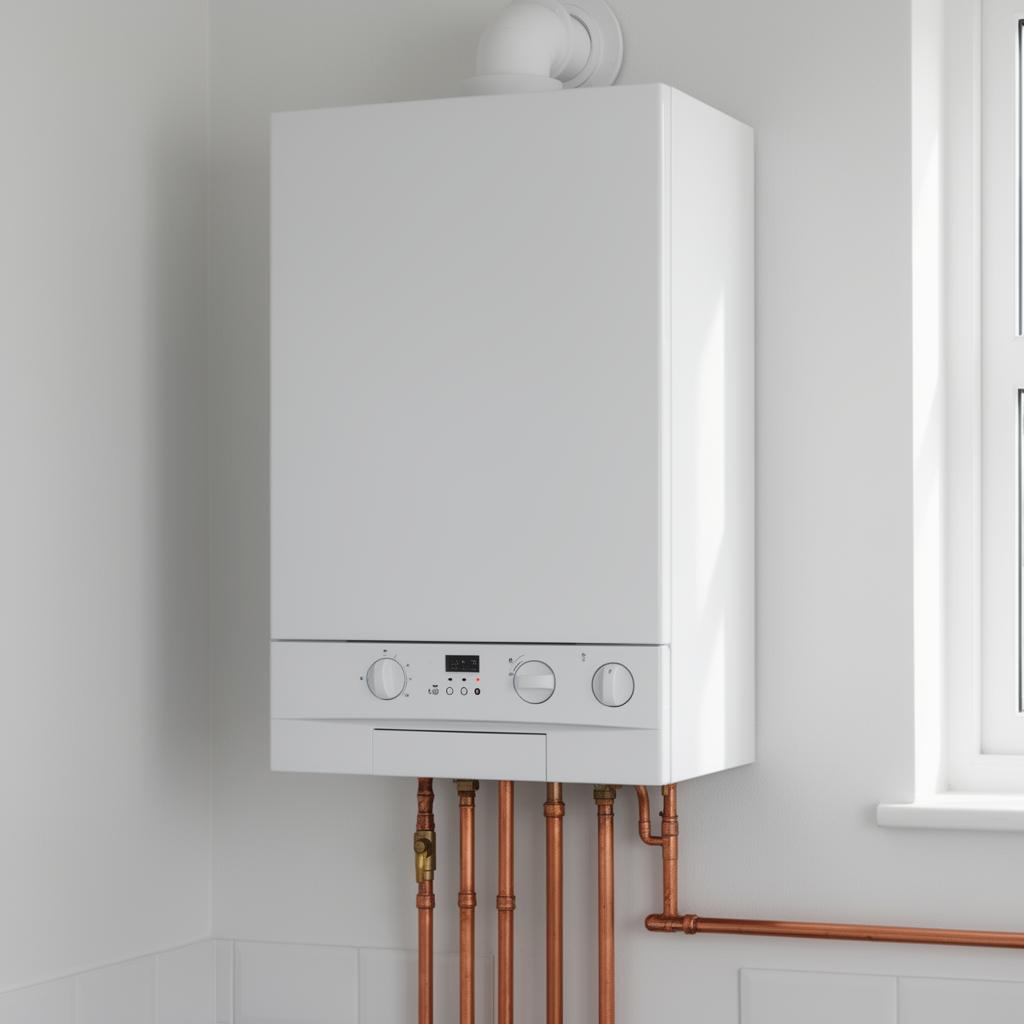
The typical sequence is: isolate and drain, remove the fire front and back-boiler casing, cap and remove the redundant gas run, decide whether the chimney is being lined for a future stove or sealed with a ventilated cap, then build out the new combi position — usually the kitchen wall or an upstairs airing cupboard. Hot and cold feeds are re-routed in 22mm and 15mm copper, the vented cylinder and loft cold-water storage tanks come out, and the loft is left clear. The old builder's opening is boarded and made good ready for decoration. It is a two-day job in most Wyken semis and the single biggest efficiency jump available to those houses.
Sizing a combi for a three-bed CV2 house
Space-heating demand in a typical Wyken three-bed with reasonable loft insulation is usually 9–14kW. Hot water is what drives the headline number: a 24–26kW combi gives roughly 10–11 litres per minute, a 30kW around 12–13 l/min, and a 35kW around 14 l/min. If your incoming mains only delivers 12 l/min, paying for a 35kW appliance buys you nothing at the tap. We measure the mains first and size to what the house can actually use.
When a system boiler beats a combi
Wyken has a fair number of extended semis with a second shower or an en-suite added over the years. Two showers running at once will defeat any combi. In those homes a system boiler with an unvented cylinder — typically 180–210 litres — is the better answer, giving mains-pressure hot water to multiple outlets simultaneously. It needs cylinder space and an annual G3 check, both of which we cover in the quote.
Flushing, filters and inhibitor
On a 1950s system with original or part-replaced steel radiators, we specify a power flush rather than a chemical cleanse. A magnetic filter — typically an ADEY MagnaClean or Fernox TF1 — is fitted on the return, and the system is dosed with inhibitor to the manufacturer's concentration. This combination is what most warranties require in writing, and it is what keeps a new heat exchanger clear.
Controls worth having
Weather compensation or load compensation lets the boiler run at lower flow temperatures, which is where condensing efficiency actually happens. Smart controls (Nest, Hive, Tado) are popular and we'll fit whichever you prefer, but a properly commissioned programmable room thermostat with TRVs balanced across the house delivers most of the saving on its own.
Documentation you should receive
A completed benchmark checklist in the boiler manual, a Gas Safe building-regulations notification, manufacturer warranty registration, your commissioning figures (gas rate, working pressure, combustion analysis) and the itemised invoice. Keep them together — you'll need them for warranty claims and when you sell the house.