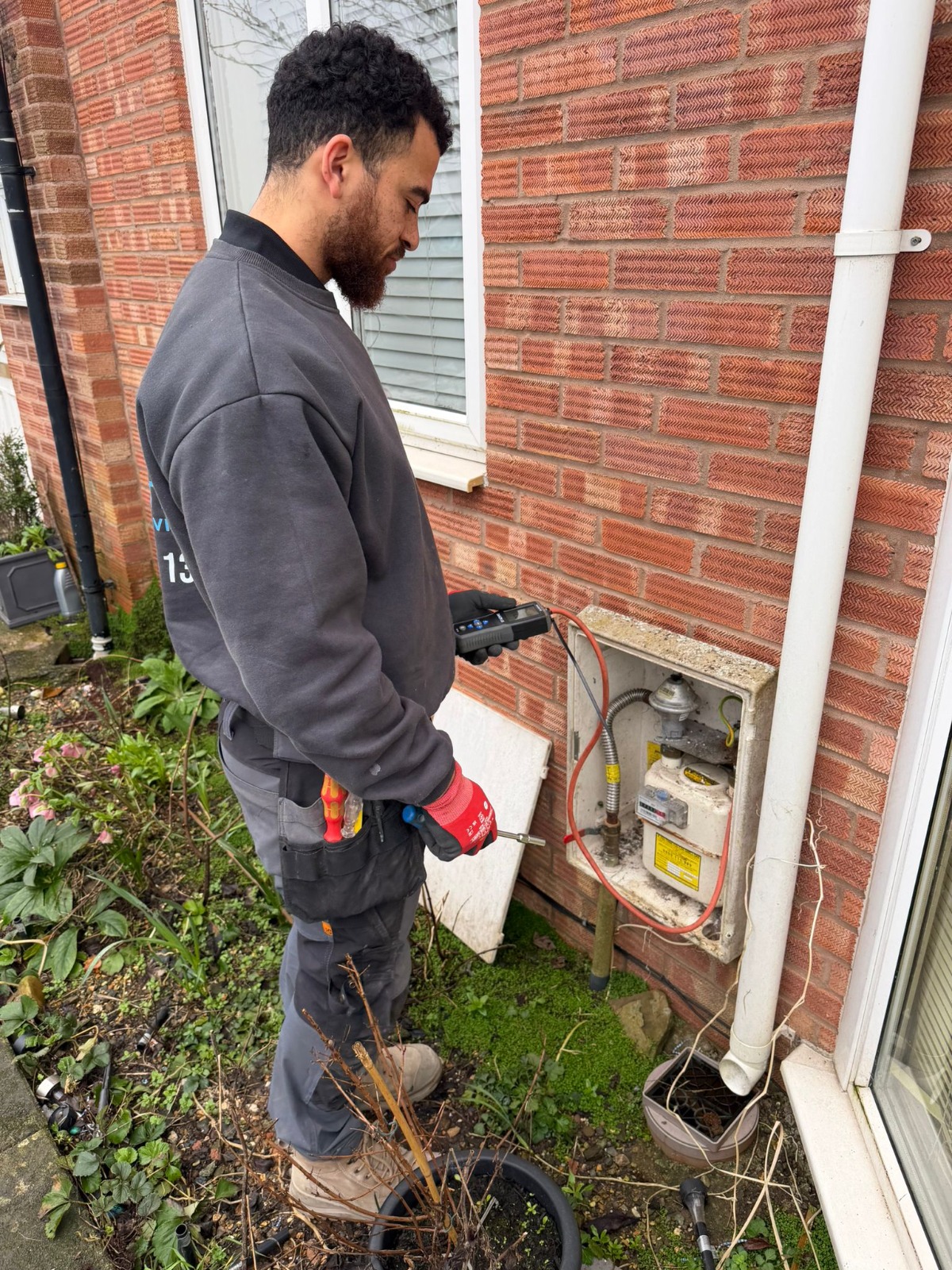
Sources of CO in domestic settings
Gas boilers (most common — particularly older non-condensing models or poorly maintained condensing ones). Gas fires (decorative live-fuel-effect particularly). Gas cookers (mostly during long simmering or grill use). Solid-fuel stoves and open fires. Oil-fired AGAs and Rayburns. LPG appliances on properties off-grid. Even barbecue grills used inside garages.
Combustion analysis interpretation
Good combustion gives CO under 100 ppm at the appliance flue with a CO/CO2 ratio under 0.004. Marginal is 100–400 ppm or ratio 0.004–0.008. Failure is over 400 ppm or ratio over 0.008. We measure and document every appliance against these thresholds.
CO alarm placement
Within 1–3 metres of each fuel-burning appliance. In every room where occupants sleep. At head height (CO has roughly the same density as air, so doesn't pool low or high). NOT in bathrooms or kitchens (false alarm triggers from cooking steam). Mains or sealed-battery long-life types only — never user-replaceable AA-battery alarms in let properties.
Flue inspection
Open-flue appliances inspected for downdraft, terminal damage, bird nest blockage. Room-sealed appliances inspected for case integrity, flue collar seal, terminal external clearance to opening windows. Condensate traps inspected — a blocked condensate trap is one of the most common silent CO risks on modern condensing boilers.
Variations: residential vs commercial vs HMO
Domestic CO check covers every fuel-burning appliance per visit. HMO and let property CO compliance is governed by the Smoke & Carbon Monoxide Alarm (England) Regulations 2022 — every room with a fixed combustion appliance must have a CO alarm, every storey of the property must have a smoke alarm. Commercial CO testing on larger plant requires CCN1 + COMCAT qualifications and additional regulatory reporting.
What to do if a CO alarm activates
Open all windows and doors immediately. Turn off any fuel-burning appliance you can safely reach. Get everyone out of the property — including pets. Don't re-enter until a Gas Safe engineer (or emergency service) has confirmed it's safe. Call the National Gas Emergency line on 0800 111 999. Get medical attention — symptoms can develop hours after the initial exposure.