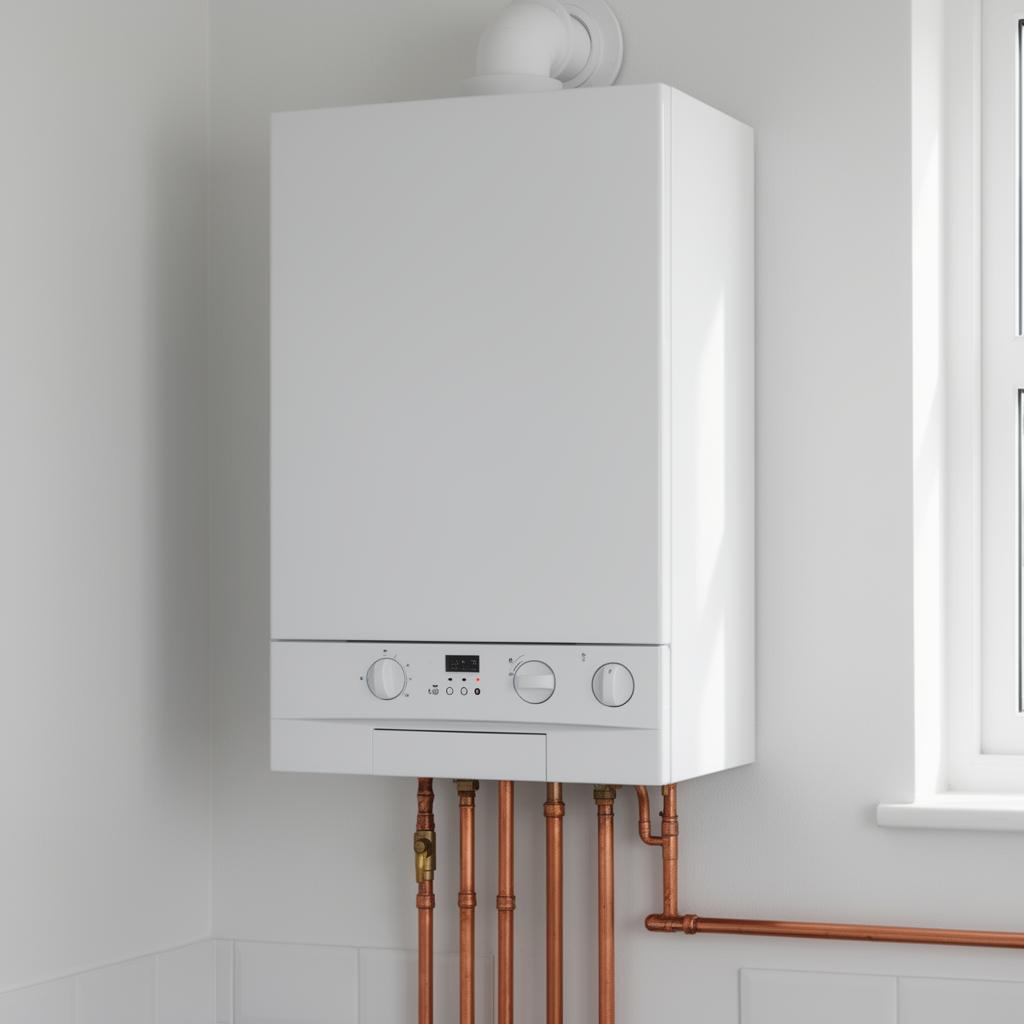
System boiler and unvented cylinder for two-bathroom homes
In a detached Binley Woods property with an en-suite, the reliable configuration is a system boiler of roughly 18–24kW paired with a 180–250 litre unvented cylinder. Hot water arrives at mains pressure to every outlet simultaneously, showers stay balanced when a tap is opened elsewhere, and the boiler runs a stable low-temperature heating circuit. The install needs a discharge route for the temperature and pressure relief, a G3-qualified engineer, and an annual cylinder check thereafter — all of which we handle.
Dealing with 8mm and 10mm microbore
Microbore is not automatically a problem, but it is intolerant of debris. We pressure-test flow through each circuit, power flush with a magnetic capture unit, and where a leg is genuinely blocked we replace that run in 15mm rather than leaving a permanently cold radiator. Where microbore is retained, a filter and correct inhibitor concentration become non-negotiable.
Replacing a developer-spec combi
Newer Binley homes usually have a compact combi in a kitchen unit with a horizontal flue through the rear wall. Swapping to a better appliance often means adapting the flue kit, reworking the condensate to an internal soil connection where possible, and adding a filter the original build omitted. Cupboard clearances matter: modern appliances need documented service access, and we check that at survey rather than on the day.
Heat-loss sizing versus rule of thumb
A modern, reasonably insulated Binley three-bed typically loses 6–10kW at design outdoor temperature — far less than the 30kW+ boilers commonly fitted. Oversizing causes short cycling, which wears components and lowers seasonal efficiency. We size the heating output to the loss and use hot-water demand to pick the model, which is the opposite of the way boilers are usually sold.
Condensate in newer properties
Wherever possible, condensate should terminate internally into a soil stack or waste. Where an external run is unavoidable, it goes in 32mm minimum, insulated, with continuous fall and a terminating point that won't ice up. This is the single most common cause of a January no-heat call-out on otherwise healthy boilers.
Balancing and commissioning
After commissioning we balance the system with lockshield adjustment and a thermometer, aiming for a consistent temperature drop across each radiator. In long CV3 estate houses with a run to a rear extension, this is what stops the far rooms lagging behind the hall thermostat.